
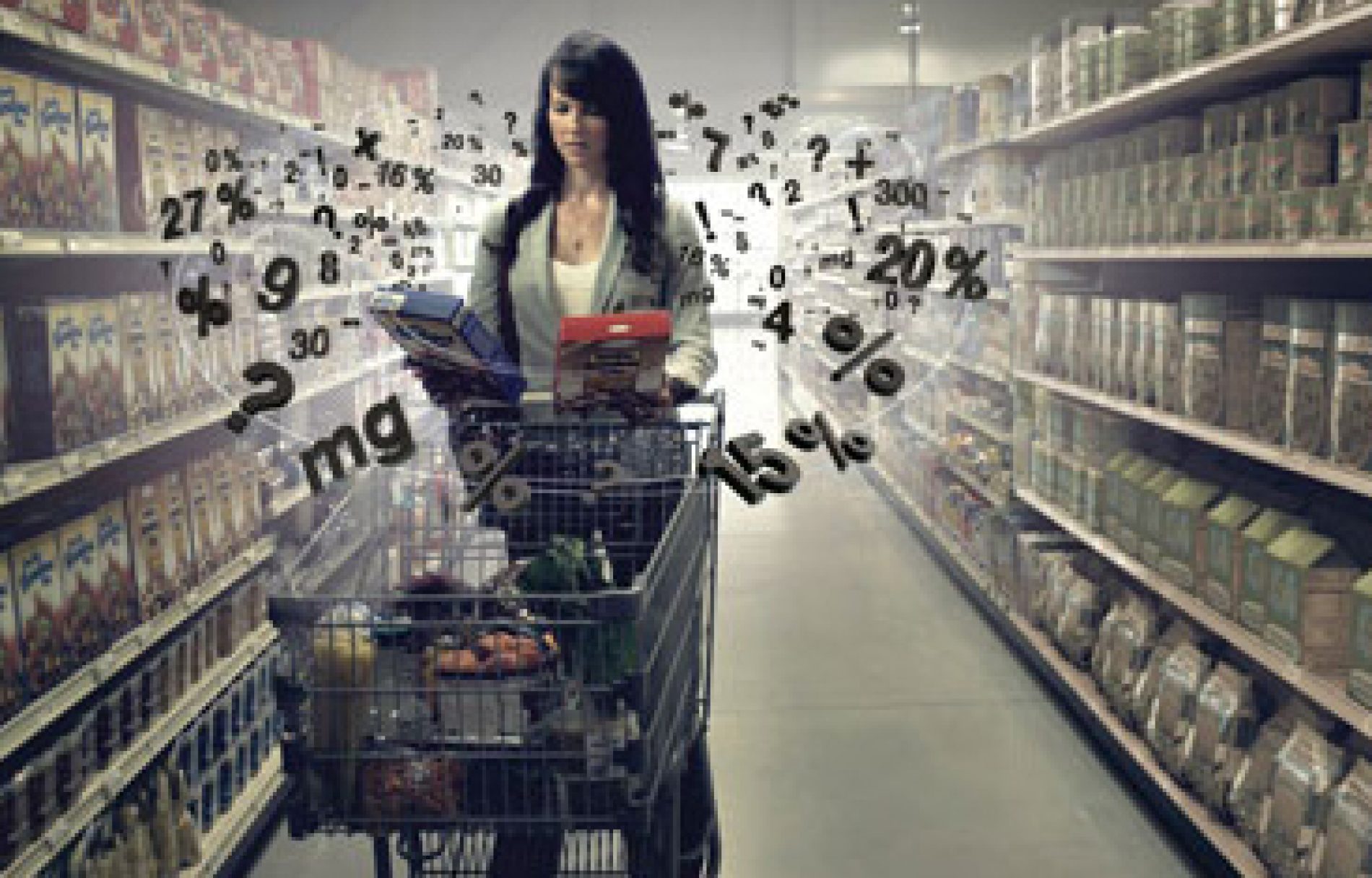
What’s So Great About Reading Labels
In 2007 the Government of Canada made nutrition labelling mandatory for all packaged foods but the question is, how is that information useful to you? In an effort to ensure consumers understand and get the benefit of nutritional information, Health Canada has launched an education campaign designed to demystify labelling. I spoke with Elaine De Grandpre, a Registered Dietitian with the Office of Nutrition Policy and Promotion with Health Canada about the campaign, the labels and who that mysterious person is who eats 1 oz of potato chips.

Q: Can you tell us a little about Health Canada’s plan to educate Canadians about the Nutrition Facts table?
A: Research shows that 93% of Canadians are familiar with the Nutrition Facts table (NFt) and that
73% refer to it when purchasing a product for the first time.
Despite broad awareness of the NFt among Canadians, they don’t always use it as well as it could be used for choosing and comparing food products to make healthy choices. That’s why we launched the Nutrition Facts Education Campaign, a multi-media campaign that helps consumers understand and use the information on the Nutrition Facts table, and in particular the % Daily Value. Using the % Daily Value (%DV) is a quick way to see if a packaged food contains a little or a lot of a nutrient.
Depending on whether a consumer is trying to eat more of a certain nutrient such as calcium or fibre, or less of certain nutrients like fat or sodium, using the % DV, which designates 5% or less as a little and 15% or more as a lot of a specific nutrient, shoppers can choose the product that is best for them.
Q: What do you think are the most confusing aspects of label reading for the average person?
A: The % Daily Value and the specific amount of food in a serving have been identified as the most misunderstood components of the Nutrition Facts table.
When consumers only look at the left side of the NFt (where the info is presented in grams and milligrams) it can be difficult to understand what is a little or what is a lot for the various nutrients.
The % DV provides the nutrient profile of a food and with that quick reference of 5% and 15% as a guide, consumers can easily compare two different food products or choose products that are higher or lower in certain nutrients.
One of the biggest mistakes consumers make is not paying attention to the portion sizes indicated on the label. It’s important to compare the listed portion size with the amount of that food you actually eat in a serving.
Q: Particularly for parents reading labels with an eye to nutrition for kids, any suggestions?
A: When choosing foods for children, just as for adults, the nutrition facts table enables you to select foods that are lower in trans fat, sodium and sugar and higher in beneficial nutrients like fibre, calcium or iron. For children, however, do not restrict nutritious foods simply because of their fat content. Offer a variety of nutritious foods, including some choices that contain fat such as 2% milk and peanut butter as growing kids need a certain amount of healthy fat.
One of the best things you can do is get your kids involved in the process. Teach them about reading labels and looking for the “good” ingredients and nutrients. Take out the measuring cups and compare the listed serving size with what they actually eat of say, their favourite cereal or crackers. Relate it to things they might be learning in school about math or science and get them started early understanding how to make better nutrition choices.
All of the information as well as interactive tools and tips for shopping with an eye to nutrition are all included on Health Canada’s website dedicated to this label campaign.www.healthcanada.gc.ca/dailyvalue
And might we add just for kicks (and education of course) check out the website section on all the alternative names that an ingredient may be labelled under…who knew there were 14 ways to label salt?!
You might also like

Karine Talks Meal Planning (Again) And Her Kids Pick Their Dinner Faves
Yesterday, I posted about my undying love for Ceri and Laura and how their meal planning strategies have changed my life forever. (If you missed it, I forgive you, however

Our 2010 Favorites: A Quick Bite With Laurie David
A quick chat with Laurie David is as hilarious as it is inspiring. We caught up with the producer, activist, writer (and a zillion more things!) while she was in

Chef Notes: Smoking Made Easy Peasy
Just the idea of smoked food gets my mouth watering. Who doesn’t love smoked oysters, smoked turkey breast, or smoked beef brisket? It’s one of the oldest ways of preserving

Hey, thanks for stopping by!
We're Ceri and Laura, a couple of magazine-editors-turned-food-bloggers. Also, we're mothers obsessed with delicious, healthy, family food. We're constantly thinking of ways to make your time (and our own!) in the kitchen easier and more productive, but still nostalgic for the days when dinner was cereal eaten over the kitchen sink.


0 Comments
No Comments Yet!
You can be first to comment this post!